
BY DIANA LAMBERT AND DANIEL J. WILLIS
EdSource
Most Californians won’t be able to vote for their local school board again this year because of a lack of candidates. Even a new law allowing school boards to raise trustee pay has not led to more competitive races statewide.
An EdSource analysis of 2,225 current races for school board seats in 52 counties found that 62% are not on the ballot because either no one is running for the seat or a single candidate is running unopposed — making that person an instant winner. A single candidate is running unopposed for 1,207 seats, while 224 have no candidates running to fill them at all.
This is a similar outcome to 2024 when 56.4% of the races in the 49 counties analyzed by EdSource were not on the ballot because there were fewer than two candidates.
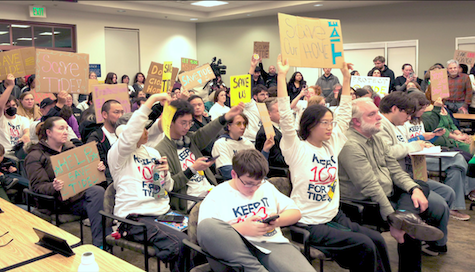
Since the Covid pandemic there has been a lot of frustration directed at some school boards, said Allan Carver, Siskiyou County superintendent of schools.
“Why would a person want to join that board and get beat up?” he said.
School boards oversee district budgets, curriculum, facilities and superintendents, and a shortage of candidates can limit voters’ choices and complicate efforts to fill board seats.
Assemblymember Jose Luis Solache Jr., D-Paramount, who authored the bill increasing the maximum school trustees can be paid, said it is too soon to tell if the legislation will mean more school board candidates. Whatever the case, raising the pay maximum was long overdue, he said. Legislators haven’t raised the amount trustees can be paid for more than 40 years.
In the 10 months since California increased the amount school trustees can be paid, dozens of school boards have voted to increase their pay.
Some increases were substantial. Elk Grove Unified trustees raised their monthly stipends by 500% to $4,500. Trustees in the Beverly Hills Unified, Oceanside Unified, Carlsbad Unified, Escondido Union School District and Antioch Unified school districts were among the districts that increased their pay by 400%.
Pay increases seem to have lured more candidates in districts that raised stipends the most. Elk Grove has seven candidates running for three seats this year, compared to eight running for four seats in 2024. Antioch has three candidates for one seat, compared to five running for three seats in 2024. Beverly Hills has five candidates running for two seats, compared to four candidates running for three seats in 2024. In Escondido, six candidates are running for three seats, compared with three candidates for two seats in 2024.
The most competitive races this year are in the Chula Vista Elementary School District, which has 12 candidates vying for three seats. In 2024, it had seven candidates running for three seats. The district increased its pay 300%, from $750 a month to $3,000.
Most of the 50 school districts with the highest numbers of vacant or uncontested school board races this election are in rural areas of California, which have struggled for years to attract candidates to school board races.
Lassen County has the highest share of races with no candidates, at 72.73%, followed by Siskiyou at 63.64%.
Carver is not aware of any K-12 school boards in Siskiyou County that increased trustee pay this year. Officials at Lassen County could not be reached for comment by deadline.
“In most of these small school districts, it’s always just been one board meeting a month and community members who just believe in the school district and want to support it as a community service,” Carver said.
If no one runs for a board seat, school boards can either appoint a trustee or hold a special election. Most boards opt to appoint a trustee to avoid costly special elections.
Finding the appointee can be difficult. In the past, Carver called people he worked with in education to encourage them to join the board. Scott Borba, executive director of the Small School Districts’ Association, contacted parents personally about taking vacant board seats when he was superintendent of Le Grand Union Elementary School District in Merced County.
In Siskiyou County, there are 45 school board races where no candidate has filed, Carver said. But he expects those board vacancies to be down to 10 by January.
“No one filed, but that doesn’t necessarily mean that nobody’s interested in the position,” he said, adding that often incumbents don’t see the point of turning in election paperwork when no one is running against them.
“It’s just easier for them to show right back up at the next December board meeting and be appointed onto the board and keep going,” Carver said. “I’m not saying that that is the best way. I’m just saying that I think that that’s just kind of how it’s evolved over time.”
A recent report from the “Getting Down to Facts” research project warns that uncontested races could weaken democratic representation and community engagement by limiting voters’ opportunities to influence the makeup of their local school boards.
The growing demands of board service, political challenges and difficulties navigating board relationships contribute to the low interest in running for school board, according to the “Getting Down to Facts” report.
About half of the 801 school board members surveyed by researchers were uncertain whether they would run for another term.
“A lot of it, too, is around the kind of emotional toll of being in the community and knowing a lot of the people that are coming at you with some of these challenges and criticisms and dissatisfactions,” said Beth Schueler, an associate professor of education at Stanford University and a co-author of the report.
It’s important that there is more public awareness about the shortage of school board candidates, Schueler said.
“I think more people might be willing to run if they realize how frequently these offices were uncontested, and the limited amount of funding it takes to run a campaign,” she said.
Roughly half of the board members surveyed for the “Getting Down to Facts” report spent less than $100 on their last board election, and only 6% spent $25,000 or more.
People don’t run for school board because they often don’t understand the role or feel prepared for it and don’t think they will be supported, said Ed Manansala, El Dorado County superintendent of schools.
To encourage candidates to run for school board seats, the El Dorado County Office of Education holds workshops once or twice a year to demystify the position. The workshops offer an overview of the role and responsibilities of trustees, governance basics and how and when to file election paperwork. Local school district leaders sometimes enlist the county office to hold workshops in their districts.
“I think that is part of the reason why we’re not seeing a significant challenge,” Manansala said.
No boards in El Dorado County have increased their pay this year, as far as Manansala knows. He says the board members he knows run for school board to contribute to their local communities, not for a stipend.
“The school board is one of the most direct forms of local democracy we have,” Manansala said. “And I think that what I have observed is individuals want to be engaged, and we’re tending to see people looking to the school boards to be able to do that. With that said, it isn’t as if I’m seeing hundreds of people lining up at the door for the roles.”
Be the first to comment