
BY NORAH SHEPPARD-HUTCHINS
Daily Post Staff Writer
Palo Alto isn’t the only Mid-Peninsula city grappling with an influx of people living in RVs on city streets.
San Carlos City Council tomorrow will discuss how to deal with complaints from businesses about RVs on the east city of that city.
Council looking at limiting parking to daytime hours and increasing fines.
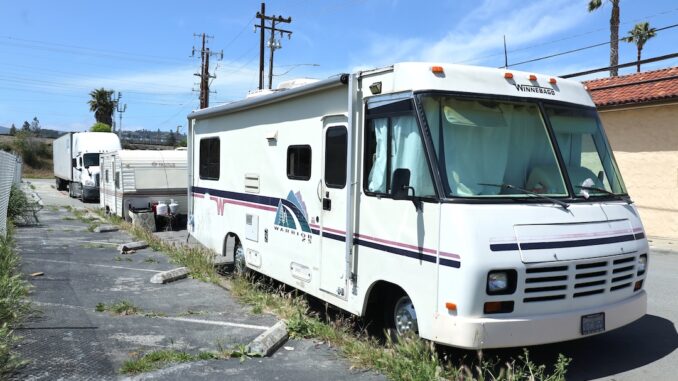
The controversy in San Carlos is emerging as Palo Alto residents and businesses have been trying to get the city to outlaw RVs from parking in front of homes and businesses. The problem exploded last year when Caltrans put bike lanes on El Camino Real, forcing the RVs that had parked there to find other streets to occupy.
On Oct. 19, Palo Alto City Council voted to ban RVs within 100 feet of any home from 8 p.m. to 8 a.m.
San Carlos is considering parking hours for RVs, too. The proposal before council would limit parking in the commercial areas of the city’s east side to four hours between 8 a.m. and 6 p.m.
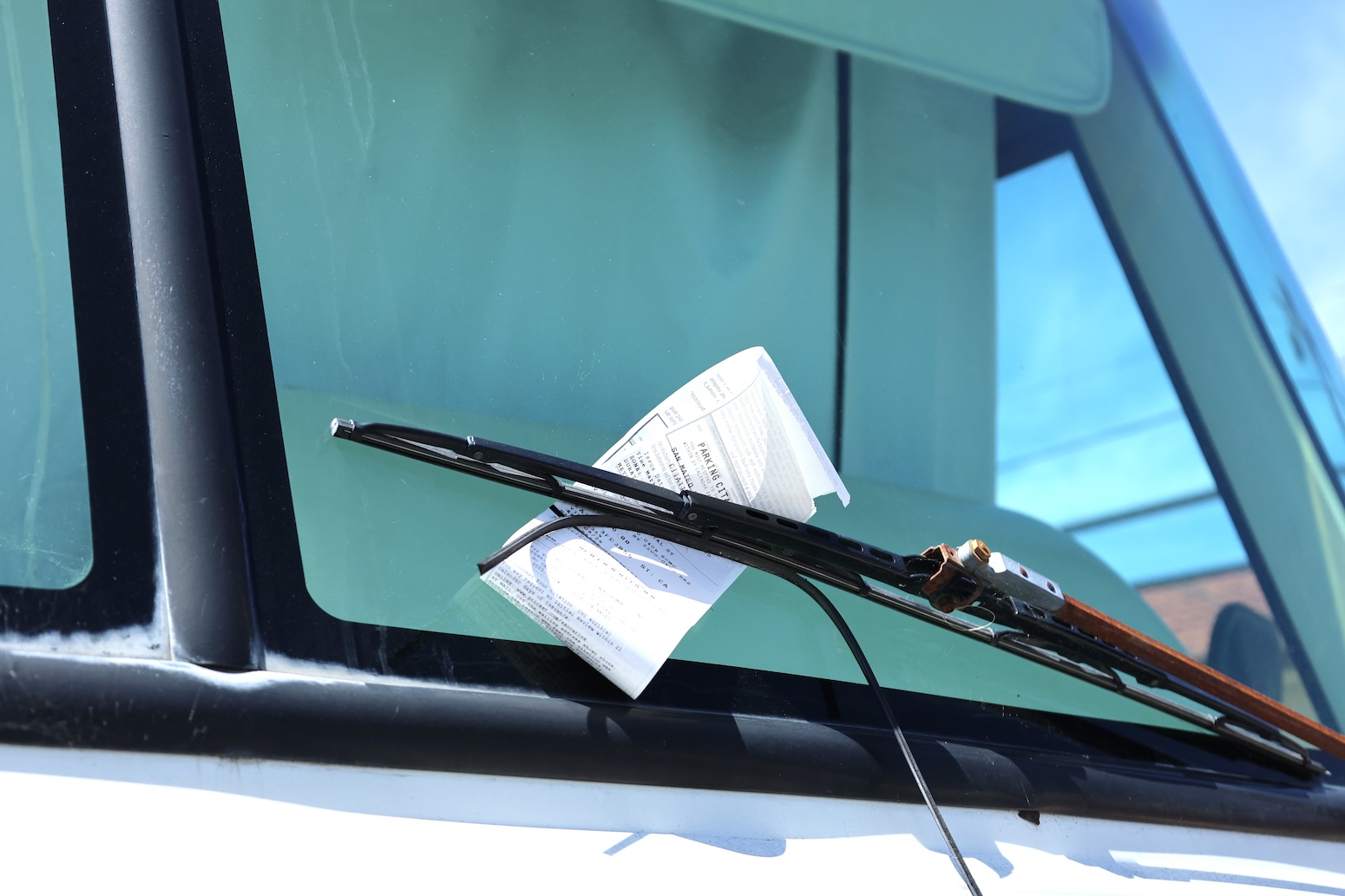
The city already has a law banning RVs from parking on public streets between 10 p.m. and 6 a.m., but those tickets cost $50. Assistant City Manager Nil Blackburn suggested council raise the cost of the first ticket to $100, then $200 and $500 for subsequent tickets.
Council expressed an interest in banning RVs at an April 27 meeting, but nearly all outright RV bans Blackburn researched have been challenged in court. The only one that is still standing is a ban on oversized vehicles in Watsonville that was passed earlier this year with the goal of getting large agricultural trucks to stop taking up on-street parking, and doesn’t really target RVs, according to Blackburn.
Survey
Since the April 27 meeting, the city put out a survey to hear residents and businesses thoughts on RVs. The city got responses from 52 residents and 18 businesses.
The 52 residents were split on whether RV parking is truly an issue, with 28 saying it is and 24 saying it’s not. Meanwhile, only two business owners said it’s not an issue, while 14 said it is (two participants did not answer that question).
Business owners said the long-term parking has restricted parking for employees and customers in the survey.
“I wanted to bring to your attention that the RV situation along Commercial Street appears to be worsening. Several RVs have remained parked in the same location for over a week without moving,” Ryan Balzer, owner of W.F. Batton Management Company at 1000 Commercial St., wrote to Police Chief Michael Tabak on July 1.
RVs have also gotten in the way of equipment deliveries for businesses, according to a Sept. 14 email sent to Tabak by Don Arata, owner of Arata Equipment Company at 1655 Old County Road.
Business blocked
“As of last Wednesday (Sept. 9), we now have had nine instances (in the last 10 weeks) where we could not get parts and pieces that we sell delivered to our business because of the oversized vehicles that have been parked directly across the street from our facility,” Arata said.
Other business owners have said RV parking has become less of an issue in the following months.
“I am not sure what you or the Sheriff’s department implemented, but there are no more issues with parking for the last month,” Tony Barulich, the owner of Camco Furnace at 1017 Bransten Road, wrote to Management Analyst Quinne Wooley on July 6.
I’m sure building more $3,000 studios will help.
Looking at Assistant City Manager Nil Blackburn’s suggestion shows just how out of touch local government is. These RV dwellers don’t have money. They just tear up the tickets and move on. What a ludicrous suggestion.
Ed Shikada is paid nearly $676,000 a year in total compensation and benefits—roughly $13,000 a week—to manage Palo Alto’s city government. That is an extraordinary amount of taxpayer money, and residents have every right to demand results.
The RV problem has been known for years. Businesses and residents have raised concerns about sanitation, blocked access, public safety, and RVs simply moving from one street to another. Yet the city continues to roll out phased plans, pilot programs, and more discussions while residents wait for meaningful, measurable improvements.
Yes, homelessness is complicated, and Palo Alto cannot solve the entire regional crisis alone. But that is no excuse for failing to manage the problem within city limits. Coordinating departments, enforcing reasonable rules, protecting neighborhoods, and delivering results are precisely what a city manager is paid to do.
Mr. Shikada is collecting a taxpayer-funded paycheck, not a charitable stipend. What specific, measurable results is he delivering for that compensation? If residents are still dealing with the same problems year after year, it is entirely fair to ask: What exactly are we paying him to accomplish?
Homelessness and RV’s are NOT the same. RV’s are considered homes per the IRS. The IRS recognizes a house, condominium, mobile home, house trailer, boat, or similar property as a home if it has:
1. Sleeping facilities
2. Cooking facilities
3. Toilet facilities
Can we please stop calling them homeless! They have homes and are circumventing all the rules, laws, taxes and utility bills the rest of us have to pay. They are already living for free on the streets we pay for. Enough is enough. Everyone is quick to point out how we need to be more accomodating, but notice nobody is offering them a room or a driveway to park in?
Agreed that 2 terminologies are incorrectly used at times. The real issue is not whether someone lives in an RV. The issue is whether they are effectively using public streets as private campgrounds, enjoying the benefits of public infrastructure without paying for the services and facilities that conventional homeowners and renters pay for. Public streets are intended for transportation and parking, not indefinite residential occupation. Residents – especially homes near and around East Meadow Circle – should not be expected to subsidize what amounts to a free campground through their taxes, particularly when it creates additional burdens involving sanitation, parking, and public safety. Thus bringing us to Ed Shikada. This is exactly the kind of issue that requires Shikada to put in some real work for his very substantial taxpayer funded salary. What does Mr. Shikada do all day with his staff? He needs to get off of his comfy chair and work – not from home – in the tax provided office and perform the tasks that he was hired to do or just resign
What the heck are these various city councils thinking? Our cities are not RV parks or campgrounds. They don’t belong here, period. If these RVers are low income and want to live here, they should band together, say 4 or 5 people, find a rental apartment or house and share the costs.
Neal, that’s a novel idea! Why don’t you drive down to Old County Road in San Carlos and inform the indigent RV dwellers squatting there they can find numerous comfortable accommodations available for them if they only pitch-in for a 2 bedroom apartment, or detached single family house, at $4000+ per month. Are you just trolling for personal attention, or do you actually review your fatuous privileged comments before posting them here?
Maximillian, are you unaware that $4,000+ per month is ALREADY the rent charged for “affordable housing” units required by the housing laws pushed through by politicians getting tons of money in campaign contributions? Check out the difference in rents to see how farcical the “difference” in “affordable” vs “market rate” rent?
If you want to talk about fatuous privileged views, what do you think of the new trend for cities to allow developers to get out of providing “affordable” housing with “in lieu payments?
Funny how those who first pushed through the housing elements and Builder’s Remedy Laws that allow atrocities like the Sunset Project are now all pushing “market rate” housing.
What a silly headline. I see RVs all over mid-Peninsula cities, and it’s been line this for years.