
BY ADRIANA HERNANDEZ
Daily Post Staff Writer
Are federal law enforcement agencies such as ICE downloading data collected by license-plate reading cameras set up by local governments?
That’s the question Woodside City Council wants to answer about its cameras.
Council voted 4-1 on Feb. 10 to look for an auditor to review requests that the San Mateo County Sheriff’s Office received from federal agencies for data collected by the cameras operated by a company known as Flock Safety.
Councilman Dick Brown voted no.
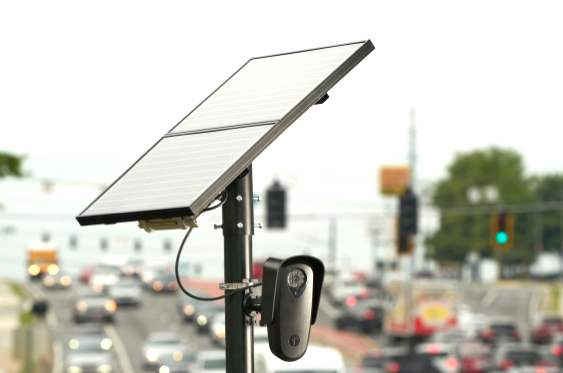
Flock cameras take hundreds of pictures a second of license plates. When a computer stitches the pictures together, it is able to provide information on the daily travels of average citizens, including those not suspected of any crime.
Councilwoman Jenn Wall said it was hard to feel confident that Woodside’s images are not being accessed by federal agencies when only a small percentage of requests are being checked. Council was told that the sheriff’s office only checked 10 of the 117,723 requests it got for Flock data.
The issue hit the front burner in late January when Mountain View Police admitted federal agencies had been downloading license-plate information from its Flock cameras without their permission. A few days after the story hit the news, Mountain View Police Chief Mike Canfield turned off the city’s Flock cameras.
“While the Flock Safety pilot program demonstrated clear value in enhancing our ability to protect our community and help us solve crimes, I personally no longer have confidence in this particular vendor. Like many of you, I was deeply disappointed to learn that Flock Safety did not meet the City’s requirements regarding our data access control and transparency,” Canfield said in a statement Feb. 2.
Federal agencies that tapped into Mountain View’s data included the Bureau of Alcohol, Tobacco, Firearms and Explosives, the inspector general’s office of the U.S.. General Services Administration and Air Force bases in Langley, Va., and in Ohio. However, ICE did not attempt to access Mountain View’s data.
Flock representative Lily Ho told the Woodside council that federal agencies accessed Mountain View’s data during a trial period for the cameras from August to November 2024, apparently before the city set policies as to what agencies could access its data. After Mountain View became a customer, policies were put in place so it didn’t happen again, Ho said.
Town Manager Jason Ledbetter said Woodside has a robust policy and allows only the San Mateo County Sheriff’s Office, Redwood City Police and San Mateo Police to access its data. Council also has quarterly meetings to review how the cameras are being used in the community, Ledbetter said.
The town has to trust that others in law enforcement are truthful when they request data, but if they weren’t, it would open an internal investigation, Assistant Sheriff Mark Myers said.
“It can’t just be a matter of faith if it involves my personal privacy,” Nancy Goodban of the police watchdog group Fixin’ SMC said Tuesday.
Residents said their concerns about the danger Flock could pose to the community outweigh the benefits of the cameras, and they demanded that council turn off its 26 cameras. The purpose of the cameras is to help law enforcement solve crimes, such as tracking down home burglars.
In 2025, Woodside’s cameras scanned over 3.1 million license plates; however, it only helped recover two stolen cars, and four arrests were made, according to Ledbetter.
“Standing by our values means choosing community trust, privacy and immigrant safety over unconstitutional hyper-surveillance,” Kimberly Woo said.
In related news, Redwood City officials said in a statement Feb. 12 that its contract with Flock ends in September and is encouraging residents to give the Police Advisory Committee feedback on whether to pursue contracts with other vendors or if the city should try other technology options.
This is the reason you keep these cameras – I bet that Pima County Arizona had these for the Guthrie investigation.
From Sunnyvale DPS: Shooting / Attempted Homicide:
“Multi-Agency Effort Leads to Arrest of Armed Felony Assault Suspect Using FLOCK Camera Alert”
On 2/16/26, patrol officers responded to a felony assault in the 100 block of South Bernardo Avenue. The suspect fled prior to officers’ arrival after assaulting one victim and pointing a firearm at a second individual.
On 2/17/26, officers received an alert from the FLOCK Safety Camera System indicating the suspect vehicle was detected in downtown Los Gatos. With the assistance of the Los Gatos Police Department and the Santa Clara County Special Enforcement Team, officers located and safely arrested the violent suspect nearby. Sunnyvale officers subsequently served a search warrant and recovered a loaded firearm equipped with an extended magazine, along with additional loaded magazines. The suspect was booked on multiple felony charges.
This case underscores the importance of inter-agency collaboration and demonstrates the effectiveness of the FLOCK safety camera system, which officers rely on daily to locate and apprehend violent offenders in the ongoing effort to keep Sunnyvale safe for the community.
Flock cameras aren’t useful when it comes to catching the bad guys because the bad guys drive cars with paper plates. Flock cameras are good at tracking the movements of law-abiding citizens, though.
However, I think “One Reason …” has a great sense of humor. Pima County, even with Flock cameras, hasn’t had any success in finding Guthrie or her abductors. Not a good example.
Interesting how these local councils were perfectly happy to have this Orwellian surveillance system tracking law abiding citizens 24/7, and only became outraged about constitutional privacy rights being trampled when they found out ICE might be using the data to track immigrants.
Interesting. Even Amazon ended its deal with Flock.
My question is what’s Palo Alto doing about Flock? Anything?
The conversation around Flock Safety cameras often misses the forest for the trees. To understand this tool, we must look at the “big picture.”
When law enforcement uses Flock, they aren’t “watching” a street corner to monitor residents; they are querying a digital history book. It is less like a CCTV monitor and more like a Google search for a criminal’s vehicle. The keyword is criminal. Unless you are associated with a crime, you aren’t being tracked.
Crime doesn’t respect city boundaries, and neither should police work. We saw this in Sunnyvale just this week. On February 16, a suspect committed a felony assault with a firearm and fled. The very next day, a Flock alert detected the vehicle in Los Gatos. Through a multi-agency effort involving Sunnyvale, Los Gatos, and Santa Clara County, the violent offender was safely arrested, and a loaded firearm with an extended magazine was taken off the streets.
This mirrors a recent San Jose case where a double-homicide suspect from Pleasanton was captured thirty miles away thanks to real-time data sharing.
It is a mistake to abandon such an effective tool just because some city staff lack the technical competence to conduct proper audits. Looking at the situation in Mountain View, it appears staff made significant assumptions and are now “saving face” by blaming the vendor.
Instead of punishing public safety for bureaucratic oversight, we should ensure the people managing this technology are competent. We shouldn’t trade community safety for administrative errors—not when these tools are the difference between a violent suspect on the run and a suspect behind bars. Think of how much more information would have been available for the Nancy Guthrie case.
A comment to Observer: There are zero Flock cameras in the Catalina Foothills near the crime scene; hence, investigators have to go find residents with Ring cameras to even get a baseline of what vehicle to look for.
If it can happen there, it can happen in Palo Alto, Menlo Park, Woodside, Atherton and the list goes on. Bottomline: If the federal government is searching for a specific target with a specific vehicle and if so it is serious. They are not looking for random immigrants and common sense should prevail that this would be a huge waste of time.
Your comments about the Guthrie case are incorrect.
1. The Pima County Sheriff’s Department has five Flock ALPR units. It wanted more, but its grant application was rejected by the Pima County Board of Supervisors in 2019 (See TucsonSentinel.com, May 7, 2019).
2. The U.S. Drug Enforcement Administration also has Flock cameras along Interstate 19 and Arizona State Route 86, according to the Arizona Daily Star (August 5, 2012, updated July 8, 2014).
3. U.S. Customs and Border Protection affixes Flock ALPR cameras to its vehicles and installs concealed cameras for limited periods during investigations and along “smuggling routes.” (Google CBP Privacy Impact Report for License Plate Reader Technology, December 11, 2017).
All of which strengthens my argument that despite these Flock cameras, Pima County hasn’t had any success in finding Guthrie or her abductors.