
This article originally appeared in the Saturday, May 10 edition of the Daily Post. To stay on top of local news, pick up an edition at one of our blue newsstands.
BY BRADEN CARTWRIGHT
Daily Post Staff Writer
The California State Historical Resources Commission Friday (May 9) determined the former Sunset Magazine headquarters in Menlo Park can be listed as a historic place, making it harder for a developer to bulldoze the building and build towers reaching 461 feet in height.
“This property clearly is significant,” Commissioner Bryan Brandes said before a 6-0 vote in Sacramento.
Developer Oisin Heneghan opposed the listing yesterday. He said the building is obsolete, and a historical evaluation was fatally flawed and backed by anti-housing activists who are trying to stop his project and others in Menlo Park.
“What’s truly historic is the housing crisis, and the devastating effects it has on Californians,” said Heneghan, appearing on behalf of a Russian businessman who owns the property at 80 Willow Road.
The original landscaping is gone, and the building has been remodeled, Heneghan said while showing pictures of the changes.
Commissioners heard passionate public comments both for and against the listing. Supporters talked about the importance of Sunset Magazine in California’s history, with a headquarters that reflected its approach to cooking, gardening, Western living and the California dream.
Opponents of the project talked about the housing crisis and said the listing was another example of “not in my backyard.”
The Menlo Park Historical Association worked with historic preservation consultants Alvin-Christian Nuval and Robert Jay Chattel to nominate the property.
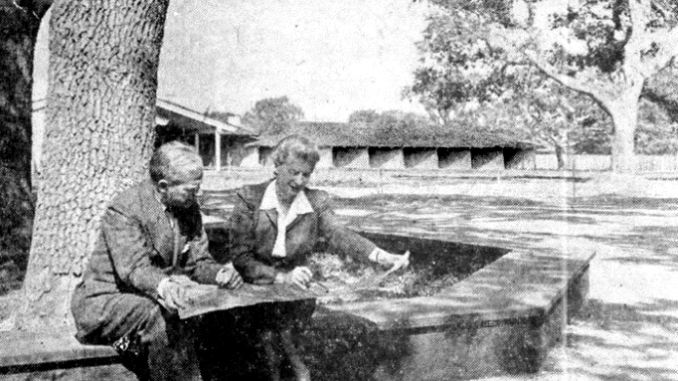
The 1951 office building, designed by Cliff May in the California Ranch architectural style, was unique for having floor-to-ceiling glass windows and sliding glass doors, “emphasizing the relationship between indoor and outdoor space,” Naval and Chattel said in a report.
The building was May’s first application of the California Ranch style to a commercial office building.
Commissioners are required by the state Legislature to consider historical integrity, not economics or social values, Commissioner Alan Hess said.
Commissioners said the headquarters has kept its historical integrity.
“Architecturally, I think it’s fantastic,” Commissioner Rene Vellanoweth.
“It does not have to be frozen in time. It needs to retain sufficient integrity to convey its significance,” Commissioner Janet Hansen said.
“The importance of this building is remarkably large,” Commissioner Adam Sriro said.
The commission’s recommendation now goes to Joy Beasley, keeper of the National Register of Historic Places for the National Park Service, said State Historic Preservation Officer Julianne Polanco.
Beasley will post the nomination in the federal register for 45 days to get public comments before making her determination, Polanco said.
Developers are required to do an environmental impact report for historic properties and make up for any impacts of the development, consultant Hank Brady said in a report for the California Senate Housing Committee.
“Mitigation could include requiring the project proponent to preserve the existing building, or to adopt design modifications to avoid impacts,” Brady said. “It is unclear what mitigation measures the city will be able to require to mitigate impacts to a site that is newly identified as historic.”
Menlo Park City Council tonight (May 13) will consider hiring a consultant to prepare an environmental impact report. A draft should be available around spring 2026, Senior Planner Calvin Chan said.
Heneghan wants to develop the seven-acre property with three towers with 675 apartments, 130 hotel rooms, 301,662 square feet of office, 36,973 square feet of retail and 1,453 parking spaces.
The towers would range from 301 to 461 feet, taller than any building from San Francisco to Los Angeles.
Heneghan is invoking the Builder’s Remedy, a provision in state law that allows developers to ignore local zoning rules in cities that were late on getting their housing plans approved by the state.
Vitaly Yusufov, the son of Vladimir Putin’s former energy minister, bought the property in 2019. In the meantime, he’s renting out the building as a co-working office called Willow Workplace, with an open house scheduled on May 21.
The sooner this Russian-funded clown car and clear abuse of builder’s remedy disappears from consideration the better for all concerned, the bleatings of Oisin Heneghan notwithstanding. Amazing to think that millionaire Hillsborough resident Heneghan would have the unmitigated hubris to characterize nomination supporters as rich elitist racists and more, especially in light of the fact that his proposed project at 80 Willow Road is a bloated pig of a commercial development dabbed with the barest BMR housing lipstick. We don’t want you or your mega office towers, Oisin–kindly move along!
Echoing the comment above.
When I first read about this atrocity, I started to joke the developers were going to have start offering Aeroflot air taxi services because all the surface roads were going to be totally gridlocked.
Too bad Menlo Park and/or CA wasted all that money on years of construction to NARROW the Middlefield Road near from the PA border right near this project all the way toward Ravenswood.
Shame on Berman and Weiner for pushing this massive underparked atrocity and shame on the hypocritical YIMBYs for their non-stop support for atrocities like this.