
This article was published in the April 19 edition of the Daily Post. Want to get all the news first when it’s fresh? Be sure to pick up a copy every day.
BY BRADEN CARTWRIGHT
Daily Post Staff Writer
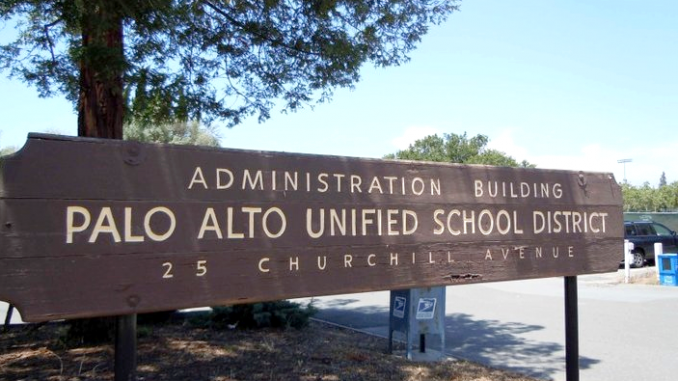
The Palo Alto Unified School District has declined to partner with the city of Palo Alto and a mental health nonprofit that would’ve evaluated the district’s mental health supports and offered areas for improvement.
Yolanda Conaway, assistant superintendent of innovation and agility, said district employees already make improvements to the district’s mental health programs every year.
“There’s value in having outside voices coming in, but I also want to honor the fact that we have brilliant people in our community with a lot of skills,” Conaway said. “So I don’t want to undermine their capacity to have conversations and be methodical and strategic about the selections of the types of things we need to focus on.”
Conaway said a new partnership could be disruptive and lead employees to resent the nonprofit even though its goals are good.
“The way it lands on our individuals who are already in the work could be exactly what we didn’t intend to happen,” Conaway told the City School Liaison Committee on April 1.
The partnership with the nonprofit JED Foundation was proposed by Councilman Greer Stone and Board President Shana Segal. Councilwoman Julie Lythcott-Haims connected them to the JED Foundation, which works with 19 school districts around the United States.
For $125,000, the JED Foundation would do a district-wide survey, form a steering committee and hold student focus groups. The nonprofit’s experts would evaluate the district, create a strategic plan, do safety trainings and help with responses after suicides, the proposal said.
Tony Walker, senior vice president with the Jed Foundation, said the nonprofit won’t come in and tell the district what to do.
“The JED foundation has no ego,” Walker said. “We are a thought partner … that is going to give you some advice, be that friendly voice and consultant behind the scenes to try to just help the district avoid any pain points along the way, based on our years of experience doing this work.”
Senior Clinical Director Kurt Michael said the JED Foundation was founded on the idea that supporting a community after a suicide is the best opportunity for suicide prevention.
“We think we can help matters rapidly. That would be my pitch. We could get in there and help you do the work,” Michael told the committee.
The district has 22 mental health and wellness associates, a wellness center at each high school, 15 school-based therapists and 20 psychologists, according to a board presentation on March 11.
The district spends $24 million each year on mental health, Segal said.
“We do assess. We do strategic plans. We do implementation plans. All those things are part of the work,” Conaway told the committee.
Instead of partnering with the JED Foundation, Conaway suggested adding a school board member to a committee working on mental health. Segal volunteered.
“See what comes out of that committee, and then bring in some additional partners to support that plan,” Conaway said.
Stone was frustrated the district declined the partnership. He said there’s an immediate need to address mental health, yet the district is going to another committee for more discussion.
“And that is just not speed. That is bureaucracy getting in the way of us tackling I think the greatest crisis that this community has ever seen, that has plagued this community for decades now,” Stone said.
Stone said he didn’t see any downsides to working with the JED Foundation. As a teacher himself, he said he’s not always a fan of evaluations, but they help him see new ways of improving.
Palo Alto City Council will still consider its own partnership with JED Foundation, and the district could join in later on.
“Having an outside perspective and having a fresh take is really valuable,” Councilman George Lu said at the meeting.