Correction: A previous version of this story should have said that there was no proof to support Harald Herchen’s claim that his wife had previously worked as an escort and sex worker.
BY BRADEN CARTWRIGHT
Daily Post Staff Writer
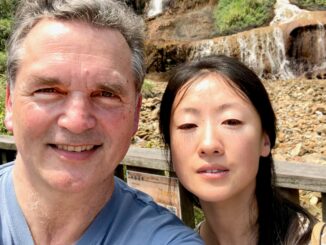
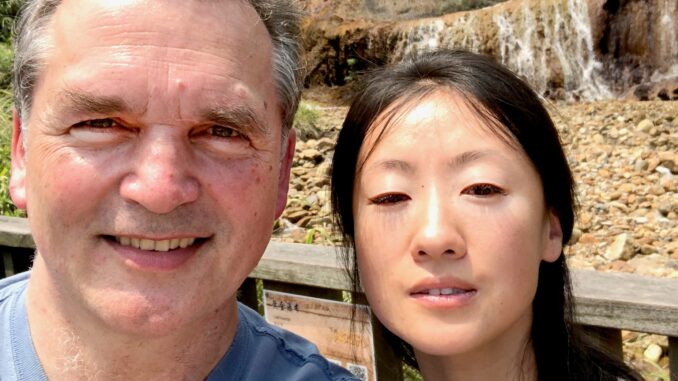
A jury Friday awarded Mountain View tutor Alice Ku’s parents $23.6 million from her husband who was accused of killing her at a national park in Taiwan.
Harald Herchen, 66, of Los Altos, kept a straight face while the verdict against him was read, and Ku’s family started crying in the courtroom in San Jose.
“I’m just overcome with emotions. I’m glad that after five and a half years, justice is finally served,” brother George Ku said afterwards.
The jury reached its verdict in about two hours, ending an emotional two-week trial that had testimony from Herchen, Ku’s siblings and dad, a Taiwanese police officer, two doctors, an email expert and an investigator who looked for Ku. The trial examined Ku’s upbringing, family life and secret marriage to Herchen in October 2017. She disappeared after sightseeing with Herchen at Taroko National Park on Nov. 29, 2019.
Outside the courtroom, jurors said they felt like something was off because Herchen didn’t show emotion about Ku like they had a loving marriage.
Jurors said parts of Herchen’s story didn’t make sense, like when he said he carried three phones in one pocket or tried to inflate a car tire with a bike pump.
Experts brought in by Ku’s side were convincing, and Herchen didn’t have any proof that he dropped Ku off at a train station where he claimed he last saw her, jurors said.
Ku’s family didn’t give up
The day started with closing arguments from attorney Todd Davis, who represented Ku’s parents in their wrongful death lawsuit against Herchen.
“He thought he got away with it,” Davis said. “But he didn’t count on the resolve and the perseverance of Alice’s family.”
Davis focused on three pieces of evidence to show that Herchen killed Ku — cellphone data, a fake email and a mysterious broken hand.
Herchen said he dropped Ku off at a train station after they visited Taroko National Park, but Taiwanese detective Li Tsong Su testified on Wednesday that cell tower data showed their phones went straight back to the hotel.
An email from Ku’s account was sent, after she disappeared, from a laptop on the hotel Wi-Fi where Herchen was staying, according to internet communications expert Tal Lavian.
Conflicting stories about broken hand
Herchen broke his hand on the trip to Taiwan, and he’s given different stories about what happened. He’s said the injury was from wrestling with his brother, punching a bookshelf and inflating a car tire with a bike pump.
Dr. Katherine Putz testified on Tuesday that she saw Herhcen at urgent care in Mountain View on Dec. 1, 2019. Herchen told her the injury was from the day Ku disappeared, and the fracture was consistent with a punch, Putz said.
“He has a history of telling cover stories when things are not convenient for him,” Davis said.
Herchen was represented by attorney Chuck Smith, who started his closing argument with a slide showing a black silhouette with a white question mark, titled “Alice Ku: A Woman Of Mystery.”
Smith said Ku lied about graduating from UC-Berkeley. Smith said Ku told Herchen to have a cover story about how they met and she distanced herself from everyone in her family except her oldest sister.
Motive?
Herchen had no motive to kill Ku, who was part of the most enriching parts of his life, Smith said. They visited historic sites and natural marvels around the world and were working on a tutoring app together.
Ku and Herchen went to Taiwan seven times in their two-year marriage yet never contacted her parents while she was there. Her brother lived in Redwood City and recently had a baby, yet she only saw him twice when she was living in Sunnyvale, Smith said. Ku’s parents didn’t have any birthday gifts or messages that showed a strong relationship, Smith said.
Herchen didn’t search for Ku because he believed she ran off with their tour guide who was younger and better looking, Smith said.
Herchen claimed that Ku had worked as an escort and a sex worker. But he had no proof of that claim. Davis and Smith agreed that wasn’t a part of the wrongful death case, and the jury wasn’t told about his unsubstantiated claim.
The jury was tasked with deciding if Herchen’s conduct was a “substantial factor” in causing Ku’s death.
There’s no fixed standard that told the jury how to award damages in the civil case. The instructions they received are for a “reasonable amount based on the evidence and your common sense.”
The jury was given a life expectancy chart that informed their decision on how much to give to Ku’s parents, who are both 75 and live in Taiwan.
The next step in the case will be collecting the money from Herchen, who works as an investor at Bloom Energy. He said he owns around eight properties in the area and lives comfortably.
“There are no winners here,” investigator Andrew Watters said. “Alice is gone, and she’s not coming back. But at least the family has some closure now.”