

BY DAVE PRICE
Daily Post Editor
If you feel like your social media feed is designed to make you angry, you’re not imagining it. Outrage drives clicks, shares, and time-on-site — and it spikes before elections, when candidates and causes compete for attention and try to motivate voters through fear and anger.
Former Daily Post editor Jeramy Gordon wrote a book journaling his struggle with online outrage and how he “clawed himself back” from endless online arguments that cost him friends, family, and his peace. Gordon warns Facebook, X, and other social media platforms are once again tweaking their algorithms and advertising policies — rolling out “election integrity” plans — meant to control what information we do and do not see online.
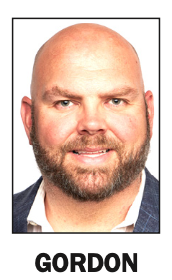
In his book, Gordon says he fell into the online outrage trap for years — and paid for it in his relationships and mental health. “Opinionated, Not Judgmental” is a book about moving from online outrage to what Gordon calls “Christ-centered clarity,” and about how he learned to hold strong convictions without treating people who disagree like enemies.
The Post sat down with Gordon to explore this issue further:
Daily Post: Are you saying outrage is a business model? What do you mean by that?
Gordon: Yes. Anger is profitable — for social platforms, for partisan media, and for anyone competing for attention. Calm nuance doesn’t spread like rage does. Slow thinking doesn’t beat instant moral certainty. Whether it’s a headline designed to trigger you or a post designed to dunk on “the other side,” the incentives reward emotional reaction.
DP: Why does it seem like it gets worse before elections?
G: Because outrage mobilizes. It activates donors, it drives turnout, it increases engagement, and it keeps people loyal to a “team.” In the months leading into an election, candidates and political organizations have every incentive to frame everything as an emergency. And platforms adjust policies and algorithms in response to election pressure — but the underlying reality stays the same: outrage performs.
DP: You mentioned platforms tweaking algorithms and ad policies ahead of the 2026 midterms. What’s your concern?
G: My concern is that we’re treating these changes like they’re neutral or purely protective, when in reality the attention economy is still built on emotional activation. “Election integrity” measures can be important, but they don’t change the deeper incentive structure: content that provokes anger spreads faster and farther than content that promotes understanding.
DP: You’re not just critiquing “the system.” You’re saying you lived this personally. What happened?
G: I did. For the better part of a decade, I spent hours arguing online — with friends, family, and strangers. I convinced myself it was virtuous, that I was defending truth. But it wrecked me. I became reactive. I wasn’t present for my wife and kids. I damaged relationships. And I lost the ability to distinguish between being right and being loving.
DP: You’re a former journalist. How does the media fit into this?
G: This is hard to admit, but I’ve seen it from the inside: sensationalism sells. The “X destroys Y” framing draws attention. It confirms bias. Outrage keeps people coming back. And while not every journalist is trying to inflame people, the incentive structure — especially online — rewards the most emotionally charged interpretation of events. That’s a problem.
DP: Is there research showing outrage spreads more than other emotions?
G: Yes. Researchers at Science magazine analyzed millions of social media posts and reported in a 2024 essay that content aimed at the political “out-group” tends to generate significantly more engagement than content about one’s own side — roughly double in some cases. The point isn’t to get into a statistics battle; it’s to recognize what it means: the machine rewards “dunking” on the other side. And if it rewards it, people will do it.
DP: You also cite research about misinformation and outrage. What does it say?
G: A study published in “Nature Human Behavior” tested the idea that misinformation spreads by harnessing outrage and found that outrage is highly engaging and doesn’t require accuracy to travel fast. That’s the scary part: outrage doesn’t need truth to go viral. It needs emotion. So if you’re wondering why your feed feels like a constant crisis, it’s because crisis drives engagement.
DP: What’s the social cost of all this?
G: It shrinks empathy. It turns conversations into competitions. It trains us to treat people — friends and family even — like enemies. And it leaks into real life: spouses avoid topics, friends stop inviting each other, families tense up at holidays, churches fracture, coworkers walk on eggshells. Our communities pay the price for what platforms monetize.
DP: Do you think this is affecting people’s mental health, too?
G: Absolutely. The American Psychological Association has warned about the cumulative stress of social discord and what they call “collective trauma.” When people are under constant stress, they’re more irritable, less patient, and more prone to conflict. So if it feels harder to be gracious right now, it might not be because you’ve become a worse person, it might be because you’re swimming in a system that profits from keeping you activated.
DP: Isn’t anger sometimes justified?
G: Of course. Anger can be a signal. Moral clarity matters. There are real injustices that should disturb us. The problem isn’t ever feeling angry by what we see on social media. The problem is living in a state of perpetual outrage, where everything is framed as an emergency and every disagreement becomes a moral indictment. That’s not clarity. That’s manipulation.
DP: So what do we do? What’s the alternative?
G: We start by refusing to participate in the business model. We stop feeding the machine.
And for me, the clearest call-to-action is simple: love your neighbor as yourself. That’s not sentimental. It’s the antidote to a culture trying to turn us into enemies.
Loving your neighbor doesn’t mean surrendering convictions. It doesn’t mean pretending truth doesn’t exist. It means refusing to let conviction become cruelty. It means not allowing politics, media, or social platforms to train you into contempt.
DP: What’s one practical thing people can do today?
G: Put the phone down before you post the angry thing. Don’t perform for your side. Don’t dunk for dopamine. If you feel your pulse rise, pause. And if you actually need to address something, do it like a neighbor — not like an enemy.
Outrage is profitable. That should terrify us. But it should also motivate us to become the kind of people who refuse to be bought.
Jeramy D. Gordon is a former editor at the Palo Alto Daily Post and the author of “Opinionated, Not Judgmental,” a book about his journey from online outrage to Christ-centered clarity.
Is there truly anybody in town who did not know this already?