
BY BRADEN CARTWRIGHT
Daily Post Staff Writer
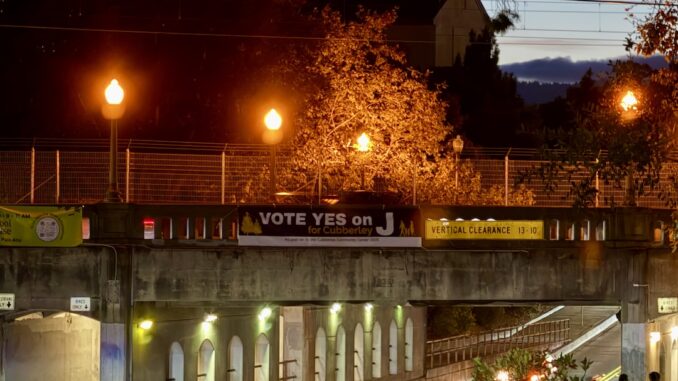
City Manager Ed Shikada says he asked the campaign supporting Measure J, the half-cent sales tax, to remove their banner from a city overpass.
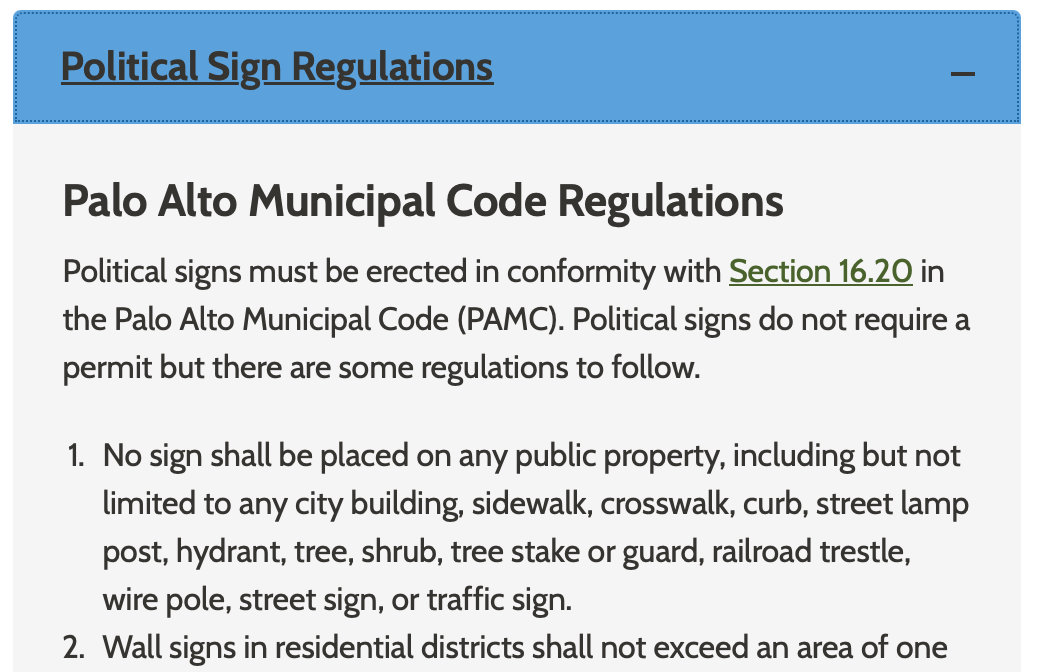
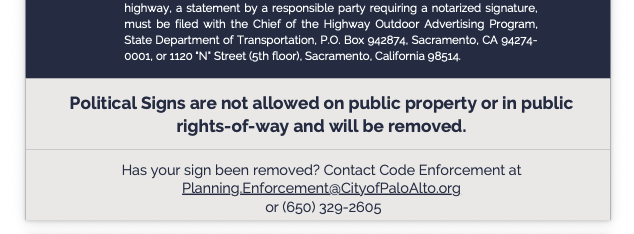
The sign at Embarcadero Road and Alma Street violated the city’s Municipal Code (Section 16.20.100) that says political signs can’t be placed on any public property. (Also see page 33 of the city’s Candidate Guide where it says “Political Signs are not allowed on public property or in public rights-of-way and will be removed.”)
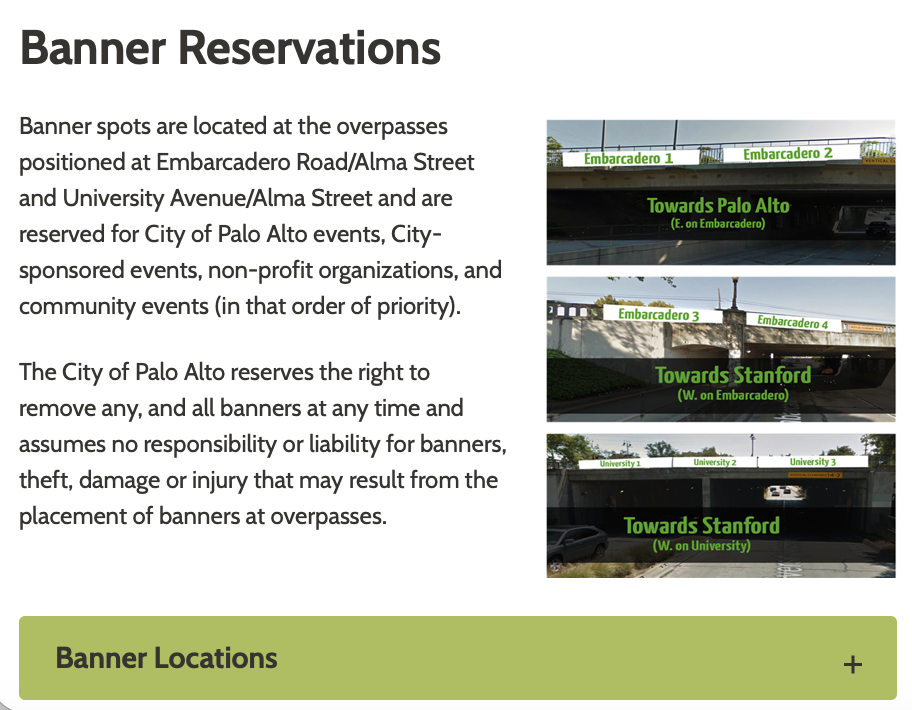
Shikada said the community services department manages banner reservations under administrative guidelines, in place for at least two decades, that prioritize banner space for city events, nonprofits and community events, in that order.
The community services department gave a permit to the “Yes on Measure J” campaign in September at the normal rental rate, Shikada said in an email on Tuesday.
“Staff did not escalate the request to a manager or consult with the city attorney’s office,” he said. “After being informed of the issue on Sunday, I requested the sponsor remove the banner, and this was accomplished immediately.”
Sunday was also the last day of the rental period, Shikada said.
“Based on this experience we are discussing potential changes to our administrative guidelines that could limit rental of this space to city or city co-sponsored events and programs,” Shikada said.
The city asked voters to approve Measure J, a half-cent sales tax to pay for a land lead and building renovations at the Cubberley Community Center. The city wants to buy seven acres at Cubberley from the Palo Alto Unified School District for $65.5 million.
Some Measure J opponents were shocked to see the banner.
“Allowing a massive political sign to hang by the week on public property is an outrage,” resident Jeanne Fleming said. “But given the way the city has cheated at every turn with Measure J, I’m just glad there’s not a ‘Yes on J’ banner draped across City Hall.”
Campaign rented the space
Measure J committee chair Jennifer DiBrienza said the city asked for the Measure J campaign’s committee name and Fair Political Practices Commission number when it applied to rent the banner space. The campaign rented space for three weeks in October: two weeks on one side of the bridge and one week on the other side.
As of Thursday morning, Measure J — which requires a simple majority for passage — was leading 7,372 (51.3%) to 7,007 (48.7%) — a 365-vote difference.
City Hall has a credibility problem.
Maybe I’m just too cynical but wondering if it was a member of the Council who approached the staff about putting up a political banner to support raising taxes.
Ed Shikada and city staff understood and continue to understand that Measure J was a 100% city-sponsored event. Ed was shocked, shocked about a campaign sign and maintains plausible deniability.
For the city to pay for billboards or bumper stickers would be a classic Stanson/Vargas violation of state law, but the city attorney creatively structured the deal to have the city charge a “fee” and not pay for anything.
This raises questions about equal access, government neutrality and whether public resources were improperly made available to one side of a ballot measure. There is a legitimate legal and election-integrity issue here, particularly because Measure J is reportedly passing by a very narrow margin. The strongest argument is not simply that the Yes on J campaign violated a sign ordinance. It is that the City improperly provided a campaign supporting a ballot measure with prominent access to public property, potentially giving it an advantage unavailable to opponents, while the City itself was promoting the measure. If proven true in court challenges, Veenker should resign.
Perhaps it was a member of the city council that asked for the illegal permit but it might also have been one of the key leaders on the measure J campaign. At any rate I imagine the permit would contain all that info and I’m sure that is a public document.