
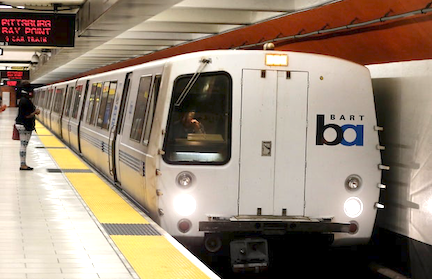
The mass transit bureaucracy in the Bay Area is once again asking hard-working taxpayers to open their wallets for yet another bailout. The Regional Transportation Measure (RTM) is a half-cent sales tax that would support out-of-control spending by Caltrain, BART, VTA, Muni and other transit agencies.
We have played this game before. In 2020, Caltrain executives begged voters to pass Measure RR, a one-eighth-cent sales tax. They claimed the money would be a critical lifeline because the system’s very survival was at stake. Voters believed the scare tactics and approved it. Now here we are in 2026, and Caltrain and its fellow agencies are already back, claiming they need more money.
Corporations avoid paying
Instead of forcing the working-class to pay, you’d think the transit agencies would tax major corporations since they benefit from a service that brings their employees to work every day.
But corporations like Salesforce, Genentech and Meta funded a signature-gathering effort to put RTM on the ballot as a sales tax. Corporations can avoid paying very much in sales taxes, but they hit the working class.
Instead of constantly asking the public for more money, these transit agencies should eliminate redundancy and put the brakes on lavish union contracts that lock in massive pay raises year after year. Taxpayers cannot be expected to underwrite unchecked operational costs when agencies refuse to implement basic efficiencies recommended by civil grand juries. For example:
• In 2019, jurors labeled the VTA as one of “the most expensive and least efficient transit systems in the country.”
• This year, jurors found that VTA failed to fix past governance issues, mismanaged the nearly $13 billion San Jose BART extension, and lacked proper oversight and transparency.
• In 2020 in Alameda County, a civil grand jury found management and unions blocked BART’s independent inspector general who was appointed to root out fraud and waste.
• In 2011 and 2012, jurors in San Francisco slammed the $1.5 billion Central Subway project as a “waste of money” and criticized Muni’s fleet maintenance issues.
If RMT passes, you’ll have to pay more in taxes. Palo Alto’s current sales tax rate of 9.75% will jump to 10.25% if voters on Nov. 3 approve Measure J, a new tax to fund the $65.5 million purchase part of the Cubberley Community Center. If voters approve the RMT, the sales tax rate will go to 10.75%.
Scare tactics
To convince uninformed voters to approve this new half-cent tax, these transit agencies are resorting to their favorite tactic: fear-mongering. They’re predicting a total collapse of mass transit. Caltrain has already released a list of train stations it will close if the sales tax isn’t approved.
Do not fall for it. We have heard these doomsday predictions before, and every time, they have turned out to be a bluff. The Bay Area deserves an efficient, accountable transit network, not a blank check funded by everyday citizens to protect corporate interests. Vote “no” on the RTM.
But wait, there’s more!
1. The 2013 BART strike proved we could adapt to transit outages, and we’re far more adaptable with work/shop from home than 13 years ago.
2. The MTC “efficiency report” claimed a Billion dollars in savings, most of which were deferrals, while expenses went up 28% from 2020-25. A total lie.
3. The SPUR “carmageddon” report took closures as a fact but ignored other revenue sources like congestion pricing and corporate funding, vanpools, corporate shuttle buses, staggered work hours, work from home and every alternative which would make more taxes unnecessary.
4% of daily trips in the Bay Area are on public transit; it is a piece of the puzzle, but far from essential for the 96% of trips that don’t use it.
What BART in particular needs to do is to re-negotiate its labor contracts. For far too long BART has had to give its unions everything they’ve asked for because of strikes and the threat of strikes. Now that ridership is way down, this is the perfect time to take a long strike. San Francisco MUNI isn’t our problem, but same thing there. Enough with the $300,000 a year janitors.