
BY ELAINE GOODMAN
Daily Post Correspondent
Three proposals for affordable housing on city-owned parking lots in downtown Menlo Park have financing gaps ranging from $19 million to $45 million, which the city could help address by reducing the projects’ parking requirement, a consultant suggested.
Other ideas include a sales tax measure to help pay for new parking garages or an annual fee for downtown business and property owners to fund parking.
The suggestions are in a report from consultant Strategic Economics, which Menlo Park City Council will discuss during a study session tomorrow.
The report comes just weeks before voters on Nov. 3 decide the fate of Measure P, a citizen initiative that would require the city to get voter approval before developing any of its eight downtown parking lots.
“To remain accessible and successful, the city’s downtown area must be easily navigated by car with sufficient parking to accommodate all visitors and workers,” the Measure P ordinance declares.
The city wants housing on the downtown lots to help it meet a state requirement to plan for 2,946 new housing units by 2031.
But opponents say parking is vital to downtown and new housing could go elsewhere, such as the Bohannon Industrial Park or the former U.S. Geological Survey site on Middlefield Road.
“There are better ways to meet our housing goals. We do not need to sacrifice our downtown,” the Yes on Measure P campaign said on its website.
When the city sought proposals for housing development on downtown parking plazas 1, 2 and 3, it asked developers to include plans for replacing the 556 parking spaces now there. Menlo Park said the parking needed to be replaced without financial help from the city.
But now, with each of the three housing proposals showing sizable financing gaps, Strategic Economics is saying the city might want to scale back its parking expectations.
“The cost of the replacement parking is having a significant impact on all three development projects’ feasibility,” they said in their report.
The report lists several ideas, which the consultant said would likely be used in combination. The 556-space requirement could be reduced. The city could take steps to encourage walking or biking downtown instead of driving so less parking would be needed, the consultant said.
Pay for it with a tax or parking meters
Voters could be asked to approve a sales tax increase to pay for a parking garage or transportation improvements.
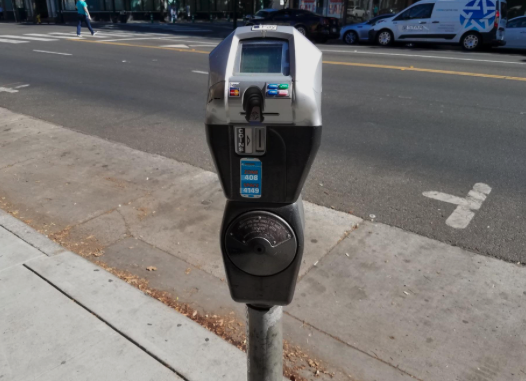
The consultant said the city could charge for parking in the proposed new parking garages and install parking meters on downtown streets. Downtown property and business owners could be charged an annual fee to help cover the cost of the garages. Or part of the property tax increase resulting from new downtown development could be earmarked for parking.
The three proposals
The three housing proposals, unveiled in December, came from Alliant Communities, Presidio Bay Ventures, and Related California in partnership with Alta Housing.
The Alliant proposal includes 345 apartments across the three city lots, including 60 senior units.
The homes would have different affordability levels, priced for people making 15% to 80% of the area median income. The area median income in 2025 was $130,600 for a single person and $186,600 for a family of four.
Under Alliant’s plan, there would be 556 public parking spaces in two garages, plus 182 garage spaces for residents.
Funding gaps
The consultant said Alliant would have a $20 million funding gap. According to the report, the developer has proposed covering the gap through a $10 million impact-fee loan from the city and $10 million in so-called soft debt, such as low- or zero-interest loans from government agencies or nonprofits.
The Presidio Bay proposal includes 347 apartments geared toward residents making 80% to 120% of the area median income. There would be 556 public parking spaces in garages and 258 parking spots for residents.
The proposal’s funding gap is $45 million, which Presidio Bay proposed covering through waivers of all city fees. In addition, a community benefit contribution from the USGS project would go toward the housing development. Presidio Bay acquired the USGS site last year. There would also be other unspecified sources of city financial support, the consultant said.
Related California and Alta Housing have proposed 500 apartments, including 154 market-rate units. The remaining units, including 126 senior apartments, would be affordable to people making 30% to 60% of the area median income.
The Related-Alta proposal has a $19.2 million funding gap, according to the consultants, who said the developers didn’t present a plan for covering the gap.
Be the first to comment