
BY BRADEN CARTWRIGHT
Daily Post Staff Writer
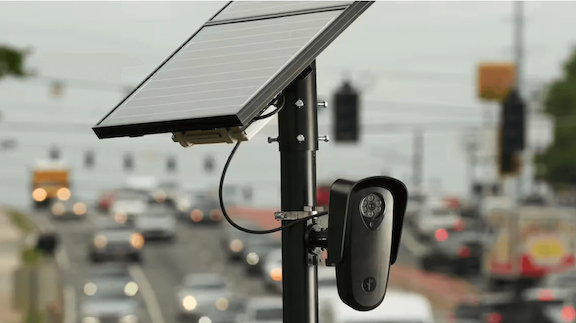
Stanford has terminated its contract with Flock, a startup that’s faced growing criticism for sharing data from its license plate-reading cameras with federal and out-of-state police agencies.
Stanford will instead contract with the Genetec Cloudrunner system for its plate-reading cameras, the university announced on Monday.
“Unlike the Flock system, the new system is designed for use within a single institution,” said Patrick Dunkley, vice provost for institutional equity, access and community.
The new cameras will take pictures of cars and license plates at campus entrances that will be stored in a cloud server for less than an hour, during which time they won’t be accessible by any third party, the university said.
The data will then be automatically transferred to a server that Stanford controls, and the data will be permanently deleted from the cloud serv-er.
Stanford police started using automated plate-reading cameras from Flock in 2024.
Data shared
Since then, audits revealed that Flock has shared data from some of the cities that use the cameras, without permission.
Mountain View, Santa Cruz and Los Altos Hills ended their contracts with Flock after learning that federal agencies could access the camera data.
Residents have pushed their cities to do the same.
“What might have started out as a well-intentioned effort to solve local crimes has exploded into a full-scale assault on our civil liberties,” resident Melissa Smith told Los Altos City Council on May 26.
“Flock can’t be trusted, and surveillance is a dangerous path to embrace,” resident Winter Dellenbach told Palo Alto City Council on June 1.
Police like the cameras
Despite the policy violations, police officers have said Flock’s cameras have been an effective crime-fighting tool.
In Los Altos, Chief Saskia Lagergren pointed to a drop in residential burglaries from 73 in 2023 to 43 last year.
The Palo Alto police union said Flock’s cameras have helped solve 139 cases since January 2024, and they’ve seen a 72% decrease in retail thefts at the Stanford Shopping Center.
“As crimes become more sophisticated, police departments must adapt,” Officer Joshua Waldorph told council. “Use of automated license plate-reader technology is so woven into current police practices that taking this tool away would be equivalent to taking away the ability to dust for fingerprints or swab for DNA.”
No surprise the government shills support the cameras. Waiting for the authoritarian Next Door types to chime in with – if you’re not a criminal, what are you afraid of?…another useful crime-fighting tool…if it saves one life. The same types who snitched on their neighbors during the great psyop of 2020 and yelled at children to “mask up”.
Alvin… 100%
As a former employee of Stanford University I know for a fact the University makes a ton of revenue in regards to the various types of parking citations it gives, and the vehicles who utilize the flock/camera system are making it a lot easier to issue these citations.
This is not a Flock problem but a configuration problem. All this negative attention direct at Flock should be directed at the police chief(s) and administrators that misconfigured the systems to share data.
We better figure this out. It is only a matter of time before we see a merger or partnership between Flock and one of the autonomous vehicle companies. What does the world look like when every autonomous vehicle is a mobile flock station and these tech companies have more policing power than the police?